
What is an Unlawful Traffic Stop?
When you're driving on a California street or highway and aren't breaking any laws, law enforcement officers can't simply pull you over without a reason.
In any police traffic stop, officers must have probable cause to initiate the stop. But what exactly does "probable cause" mean, and how can you recognize if your rights are being violated?
Within our criminal justice system, probable cause is evidence that would lead a reasonable person to believe that a crime has occurred or that there is evidence of a crime at the location to be searched. In simple terms, probable cause authorizes the police to stop you.
For example, a police officer typically justifies pulling someone over in their report by citing reasons such as speeding, running a red light, driving without headlights, excessive braking, weaving, reckless driving, or other traffic law violations.
However, if these reasons are not true, then the officer who stopped you could have violated your constitutional rights.
Police Must Follow Guidelines
Police must follow strict guidelines when initiating stops or conducting sobriety tests, which helps the audience feel confident in their legal protections and the fairness of the process.
To initiate a traffic stop and conduct a roadside sobriety test on a suspect for drunk driving, police officers must adhere to specific legal guidelines. As stated, officers need probable cause to pull over a vehicle suspected of DUI.
If law enforcement pulls over someone who hasn't broken any laws or shown signs of intoxication, any evidence they collect might be inadmissible in court. Our California criminal defense lawyers will examine the relevant laws in more detail below.
Unreasonable Police Search and Seizure
Individuals, including drivers on California's highways, have protections under the Fourth and Fourteenth Amendments against unreasonable searches and seizures by police.
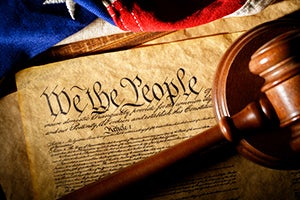
These rights are also recognized under California's state constitution.
Both the United States Supreme Court and the California Supreme Court have held that police cannot initiate a traffic stop without reasonable suspicion that a crime is occurring.
Traffic stops can constitute seizures under the Constitution, and police inspections of stopped vehicles can be considered searches.
Extensive federal case law outlines what officers must observe and be able to explain to justify a traffic stop based on reasonable suspicion.
Why the Grounds for Police Stops are Important
Evidence and legal arguments regarding whether police had reasonable suspicion to justify a traffic stop are crucial in DUI cases.
Reasonable suspicion is significant because the Supreme Court's exclusionary rule in Mapp v. Ohio generally mandates that courts exclude evidence obtained in violation of Fourth and Fourteenth Amendment rights.
The law provides mechanisms to exclude unlawfully obtained evidence, which can give the public hope that wrongful police actions can be challenged and overturned.
Motions to Exclude Illegally Obtained Evidence
Procedural rules in criminal cases provide a DUI defendant with mechanisms to uphold their rights and contest the charges. An experienced DUI defense lawyer would act early before trial to exclude evidence obtained from an illegal stop.
If the trial judge grants the motion and the prosecutor lacks enough other evidence to support the charge—as is often the case—defense counsel would request the dismissal of the DUI charges.
Courts frequently order such dismissals after approving a motion to exclude if the prosecution has not already agreed to dismiss the case.
Reduced or Dismissed Charges
A compelling reason to exclude evidence derived from questionable police action can persuade a cautious prosecutor to lower the charges or drop the case altogether.
Specifically, if an initial traffic stop was made without reasonable suspicion, it jeopardizes the validity of all subsequent evidence.
The derivative evidence doctrine, or fruit of the poisonous tree doctrine, generally prevents evidence obtained from an illegal search or seizure from being used in court. Essentially, an unlawful stop can undermine a DUI case.
Evidence that is excluded due to a lack of proper grounds for a traffic stop includes:
- the officer's observation of the driver's glassy eyes and slurred speech;
- the officer observing open containers of alcohol or drugs in the vehicle;
- results of the field sobriety test conducted on the driver after the illegal stop;
- preliminary alcohol screening (PAS) test results following the stop;
- results of the blood-alcohol test following the illegal stop;
- driver confessions and admissions after the illegal stop; and
- incriminating statements from passenger witnesses inside the vehicle.
Examples of Situations That Justify a Police Stop
Police usually need to record and recall particular observable driver actions or omissions to justify their traffic stop when investigating DUI crimes. Lawful police stops based on reasonable suspicion typically follow these patterns:
- lane violations, particularly repeated wandering or weaving across lines;
- unnecessary lane changes when conditions do not warrant them;
- speeding excessively beyond the limit or at a rate unsuitable for current conditions;
- unacceptably slow speed that causes additional driving risks;
- failure to adjust speed appropriately, such as driving fast in slow lanes and slow in fast lanes;
- wrong-way driving on one-way streets;
- disregarding traffic signs and signals, such as ignoring stop signs or red lights;
- near-miss accidents, particularly those prevented by other drivers;
- frequent braking or riding the brake unnecessarily in situations that do not require it;
- U-turns and illegal turns that violate traffic laws or are made in unsafe conditions; and
- vehicle issues such as lights failing after dark or tops not staying down in cold or rainy weather.
Sobriety Checkpoints Exception
Sobriety checkpoints are an exception to the Fourth and Fourteenth Amendments' requirement of reasonable suspicion.
Both the U.S. Supreme Court and the California Supreme Court have ruled that sobriety checkpoints qualify as permissible administrative inspections, even without particular cause to stop drivers.
The California Supreme Court has outlined several criteria that sobriety checkpoints must satisfy. These include that police do not profile drivers or impose prolonged initial detentions beyond a brief inspection for intoxication signs.
Additionally, California Vehicle Code 2814.2 VC requires drivers to stop at clearly marked sobriety checkpoints.
Available Defenses to DUI Charges
If your police stop was unlawful, you can challenge the charges, giving the audience a feeling of empowerment to defend their rights effectively.
Our law firm can investigate the details of the police stop that resulted in your DUI arrest. We will thoroughly review the field sobriety test and any breath or blood tests conducted after your detention.
If you were arrested at a DUI sobriety checkpoint, we can examine whether it was legally established. Law enforcement officers must adhere to certain rules at sobriety checkpoints. If they do not follow proper procedures, any criminal charges might be dismissed.
Despite the circumstances surrounding your California Vehicle Code 23152 DUI charge—whether it's your first DUI, multiple offenses, a felony DUI, or DUI causing injury—our criminal defense lawyers are here to assist you.
We also know how to safeguard your driver's license at your DMV hearing, which must take place within ten days of your arrest. The Hedding Law Firm is based in Los Angeles County, and you can reach out to our office for a free initial consultation.
Related Content:
