
CA Health and Safety Code 11377(a) HS - Possession of Methamphetamine
Possession of methamphetamine is addressed under California Health and Safety Code 11377(a). To secure a conviction under this law, the prosecutor must demonstrate that you unlawfully possessed a controlled substance, were aware of its presence, understood it was a controlled substance, and that the amount was usable.
Other provisions relate to the possession, sale, transportation, or manufacturing of methamphetamine, typically leading to more severe penalties for defendants.
Before California voters enacted Proposition 47, possessing methamphetamine alone, without additional aggravating factors, could result in a felony charge and imprisonment in state prison.
Following Prop 47, most HS 11377 methamphetamine possession cases are now classified as misdemeanors. However, there are still instances where a felony charge will be applied for methamphetamine possession.
Methamphetamine is often called meth, crystal, crystal meth, or ice. A controlled substance refers to any drug whose production or possession is regulated by the Controlled Substances Act.
Our California criminal defense attorneys have provided a detailed review below to help readers better understand HS 11377 possession of methamphetamine.
What Must Be Proven to Convict?
To convict you of possessing methamphetamine under Health and Safety Code 11377, the prosecutor must demonstrate all the elements of the crime as specified by CALCRIM 2304 Jury Instructions.
- You possessed methamphetamine.
- You recognized the substance as methamphetamine.
- You were aware of the substance's presence.
- There was a sufficient amount of methamphetamine.
The term "possession" can refer to actual possession, constructive possession, or joint possession. In essence, illegal possession of meth may occur if you merely exercise control over it or share possession with others.
Additionally, as shown in the elements of the crime listed above, it must also be proven that you were aware of the drug's presence and its status as a controlled substance.
In other words, if you did not know you had methamphetamine or that it was a controlled substance, you should not be convicted of violating HS 11377. A "usable amount" refers to more than just residue and is enough to produce a high.
What Are the Related California Laws?
- Health and Safety Code 11350 - Possession of a Controlled Substance
- Health and Safety Code 11351 - Drug Possession for Sales
- Health and Safety Code 11352 - Transporting or Selling Controlled Substances
- Health and Safety Code 11378 - Possession of Meth for Sales
- Health and Safety Code 11379 - Transporting or Selling Meth
- Health and Safety Code 11379.6 - Manufacturing a Controlled Substance
- Health and Safety Code 11383.5 - Possession of Material to Manufacture Meth
Penalties for Possessing Methamphetamine
If a defendant has prior convictions for serious felonies like murder or sex offenses requiring registration under Penal Code Section 290, a violation of Section 11377(a) may be prosecuted as a felony, significantly affecting potential penalties.
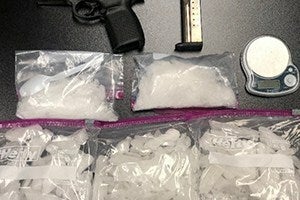
A felony charge under Section 11377(a) can lead to 16 months, two years, or three years in California state prison.
In contrast, a misdemeanor under the same section is punishable by up to 1 year in county jail, a $1,000 fine, or both.
Although most methamphetamine possession cases are now classified as misdemeanors, it is important to note that possessing large quantities, even without intent to distribute, can lead to extremely lengthy prison sentences.
If the prosecution demonstrates that the defendant possessed over one kilogram of methamphetamine, the defendant could face an extra three to fifteen years in state prison on top of the regular sentence.
Drug Diversion Programs
Several diversion programs, such as drug court, Proposition 36, and Penal Code Section 1000 Deferred Entry of Judgment, are available for first-time personal possession cases, offering a chance to avoid criminal conviction through treatment and counseling.
Successfully completing drug treatment programs can lead to charges being reduced or dismissed, offering hope and a chance for a fresh start.
Fighting Meth Possession Charges
Challenging the legality of the search and seizure can help you feel confident that your rights are protected and that your defense is strong.
If law enforcement searched without a valid warrant or without any warrant at all, it is then the prosecution's responsibility to prove that the seizure was lawful.
The government usually depends on one of several exceptions to the general warrant requirement, such as the automobile exception, the search incident to arrest exception, the plain view exception, or others.
However, in many cases, there are legitimate objections aimed at suppressing the methamphetamine, arguing that it was obtained through a violation of the defendant's Fourth Amendment rights against unreasonable searches and seizures.
Other defenses include arguing that the methamphetamine belonged to someone else or that the defendant was unaware of its presence, which can be crucial for those worried about proving their innocence.
If you or someone you know has been arrested, investigated, or charged with a serious California drug crime under Health and Safety Code Section 11377(a) - possession of methamphetamine - reach out to our experienced criminal defense lawyers at the Hedding Law Firm for a consultation.
